Is all really fair in both love and war?
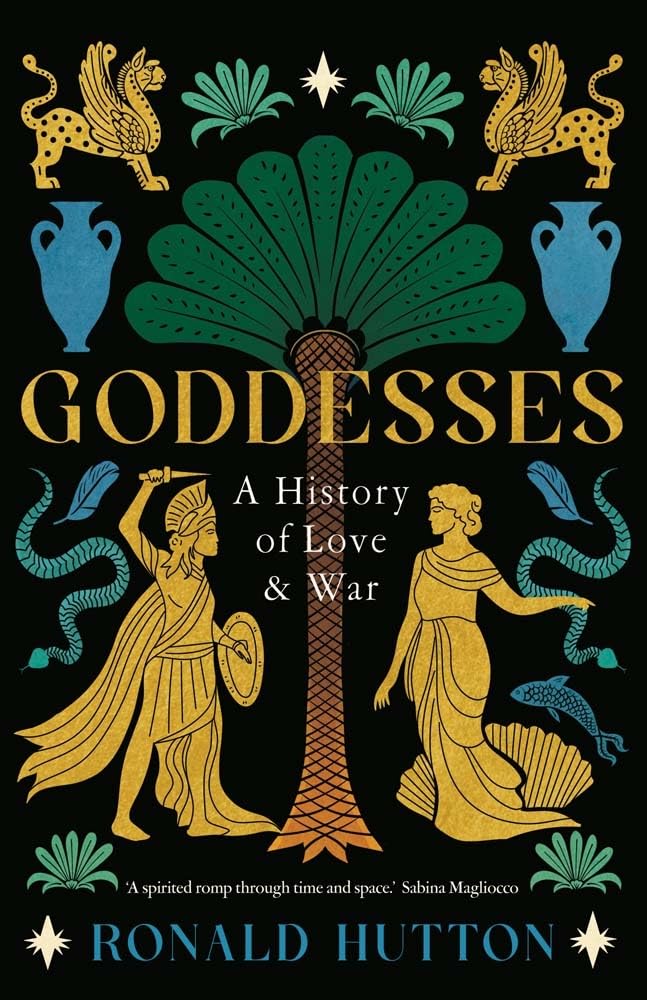
When it comes to the deities of the ancient world, love and war go together like a horse and carriage. Why is that?
Well, one possible reason, according to Professor Hutton, is that they represent two of the most basic interests of the menfolk of these patriarchal societies. Yes, there must needs be a patron goddess of the orchard or the birthing chamber, but that is hardly going to get the juices going in quite the same way as seducing a woman or slaughtering your enemies.
Ronald Hutton traces the history of eight key goddesses in ancient societies, including Sumerian Inanna, Greek Aphrodite, Egyptian Hathor, and Ireland’s The Morrigan. From Mesopotamia through Syria, Palestine and Egypt to northern Europe, and spanning thousands of years, beginning in the 3rd or 4th Millennium BCE, he finds a recurrent pattern of this, perhaps counter-intuitive, association of love – or at least sex – and war. It is an exhilarating and delicious journey.
Ronald Hutton – Yale University Press £25.00
Podcast: Play in new window | Embed







































 Senator Burton K Wheeler put the question best: If the war in Europe was America’s war, why was she not fighting it? It was the vital question of its day. Should America join the European war or not?
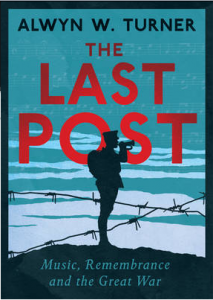 No Man’s Land is already littered with books on the Great War, and there will be many more hurled into the fray, but not many of them will be as original as this thoughtful and engaging treatment by the historian